The inverter for solar pumping applications
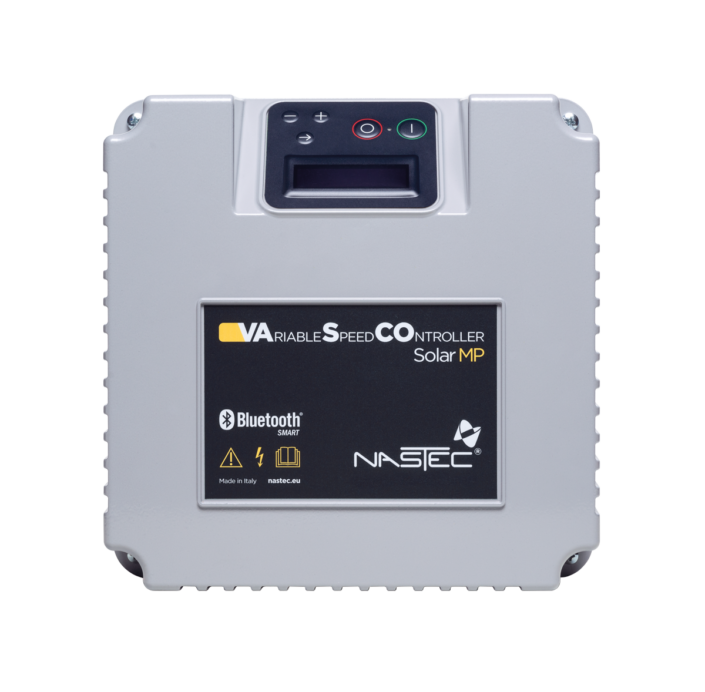
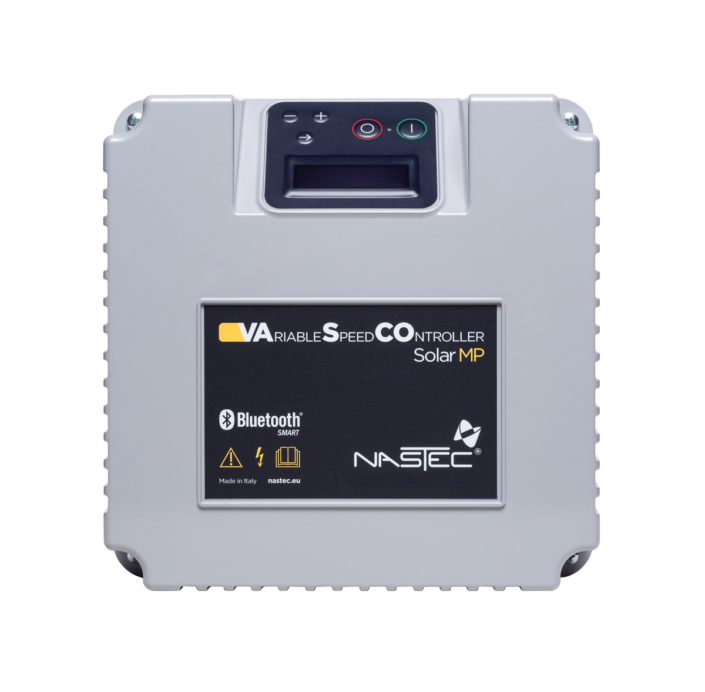
New VASCO Solar VAriable Speed COntroller in MultiPower versions

maximum flexibility
VASCO Solar – VAriable Speed COntroller can be used with any type of traditional AC pump thereby offering maximum flexibility in several areas of application


Nastec Srl Unipersonale
Via della Tecnica 8
36048 Barbarano Mossano
Vicenza – Italia
t. +39 0444 886289
f. +39 0444 776099
p.iva & c.f. 03392100248
c.s. 250.000€ i.v.
info@nastec.eu
pec@pec.nastec.eu
About us
Products for grid
Solar energy products
Services
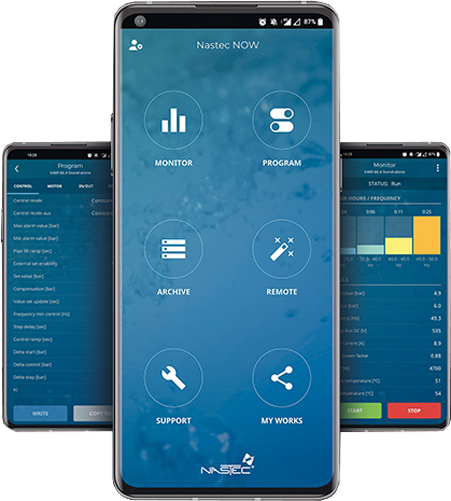
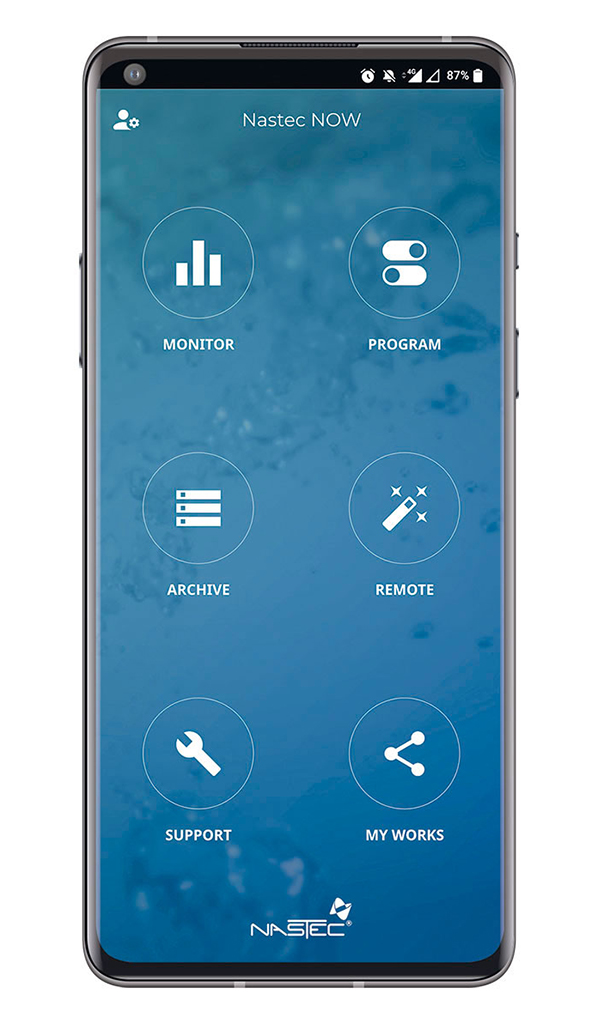
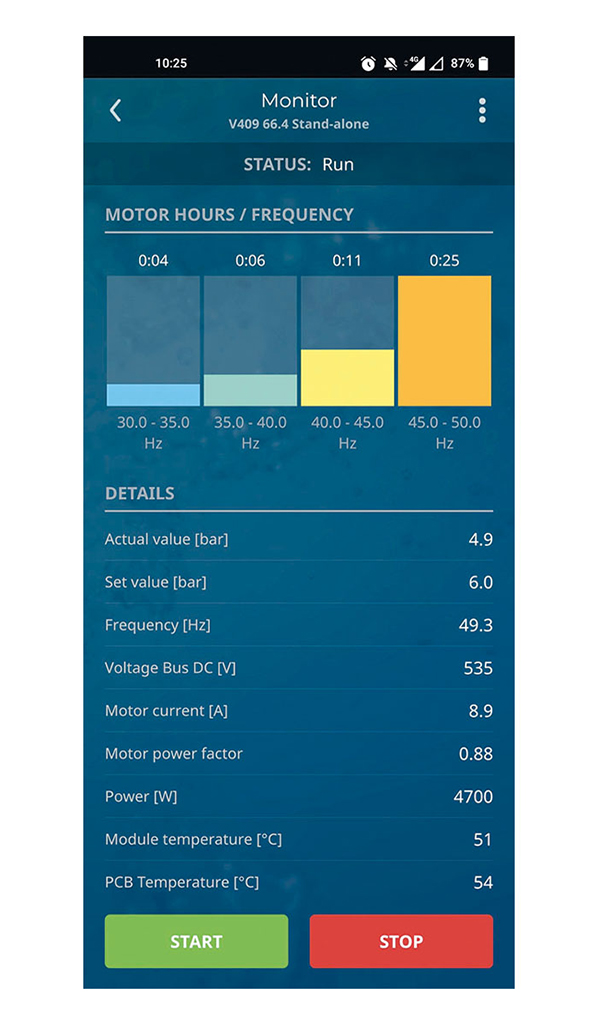
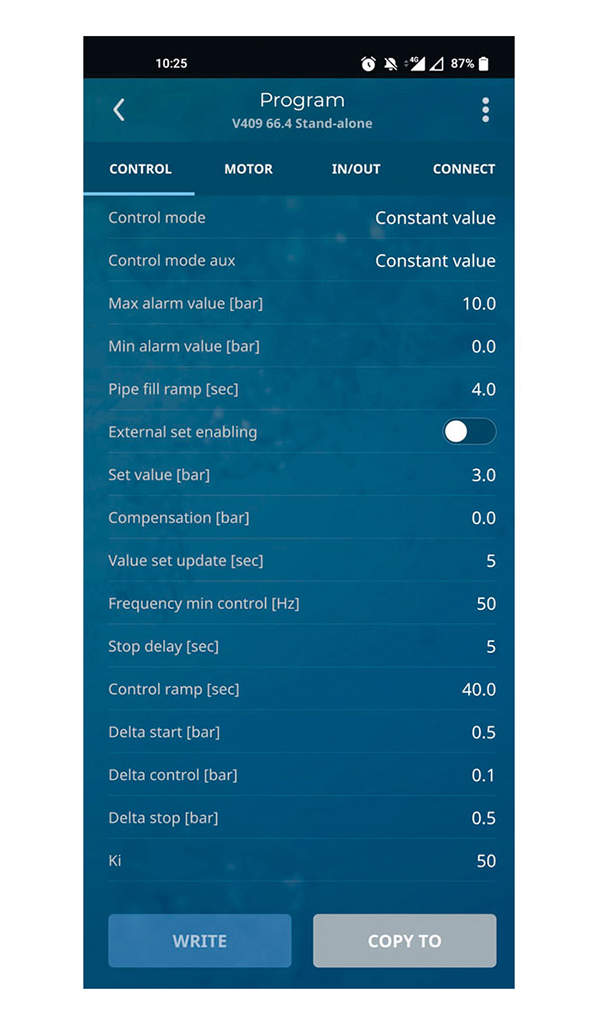
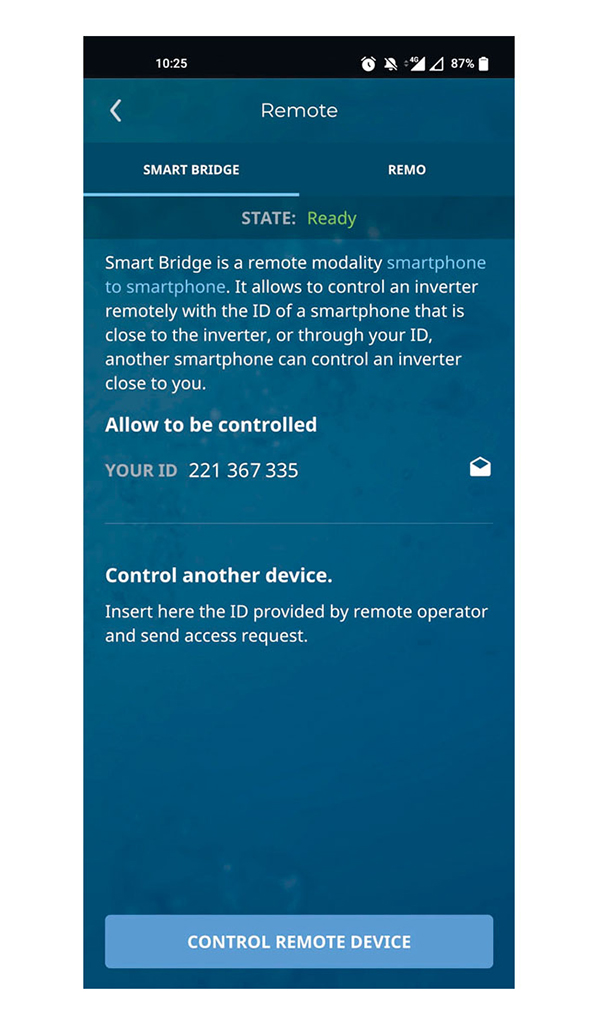
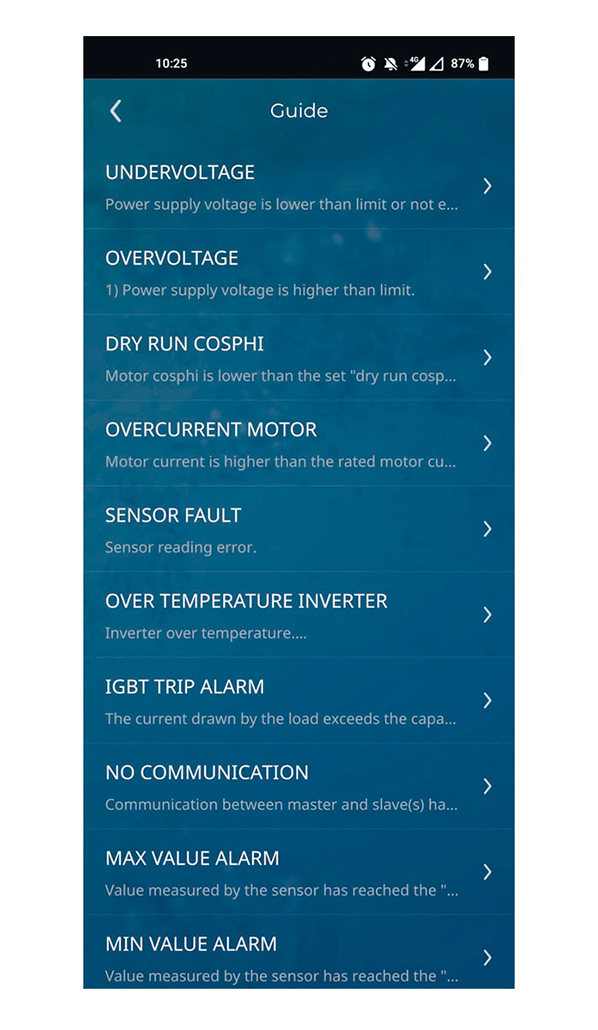
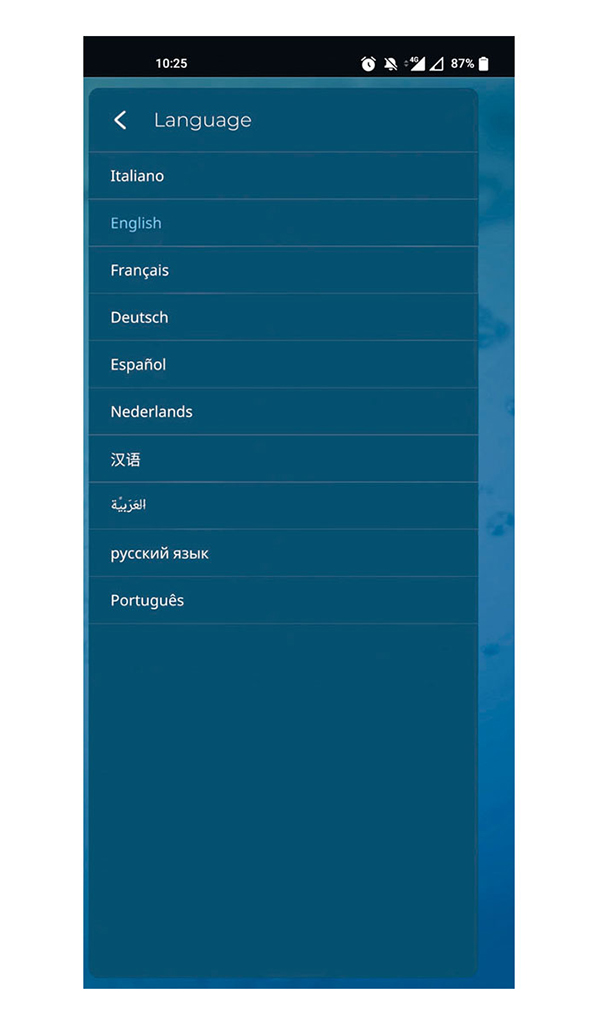
Thanks to Nastec NOW App it’s possible to communicate with all Nastec devices Bluetooth® SMART in order to:
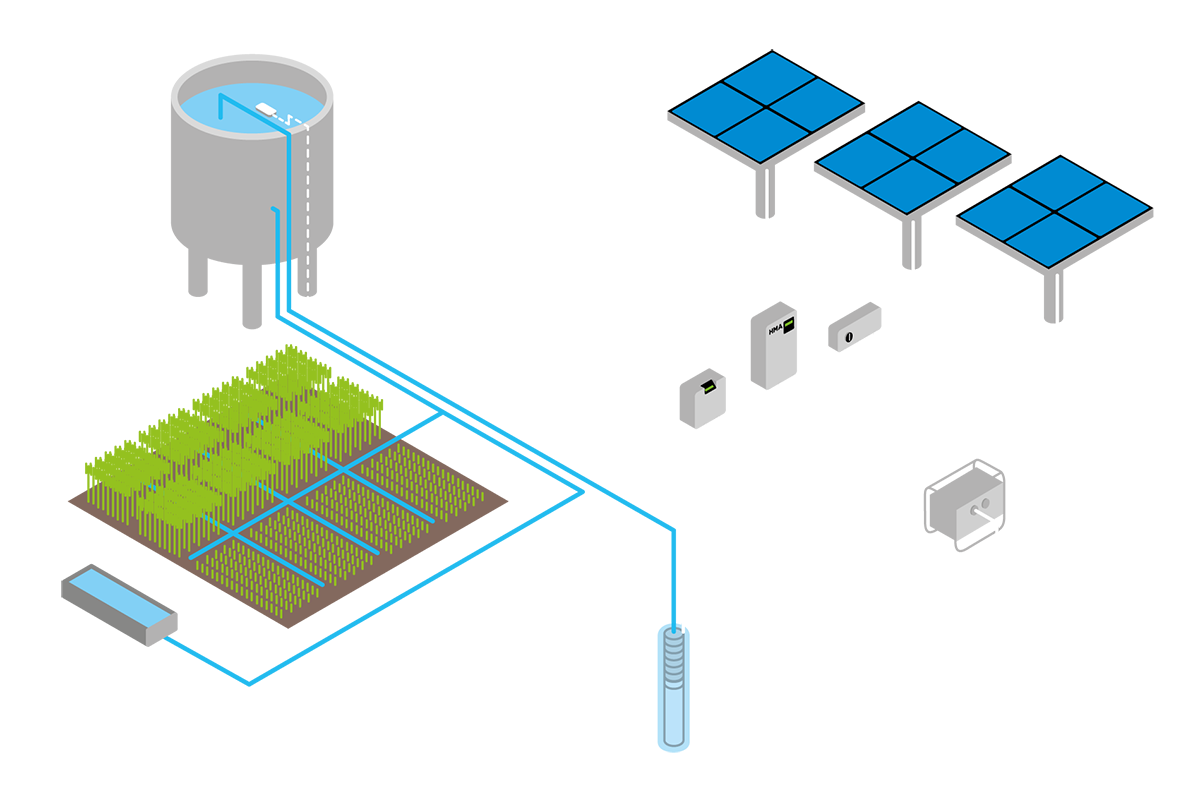
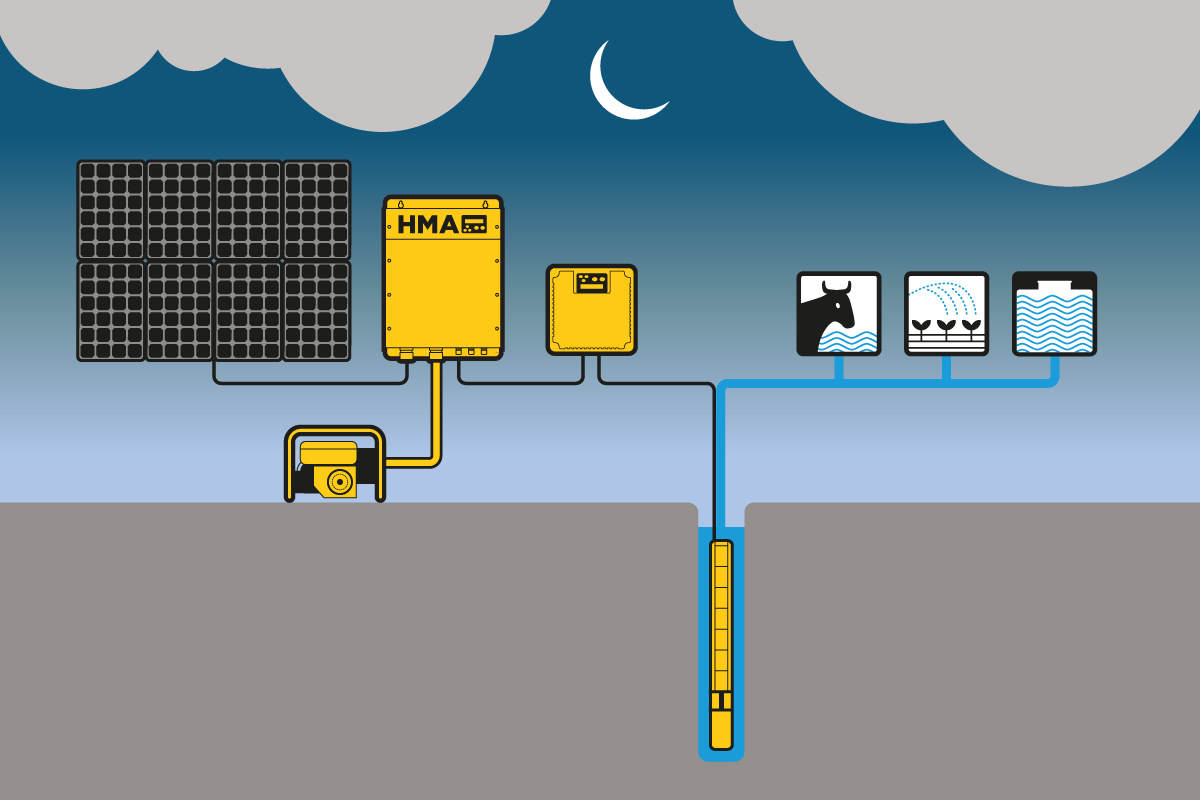
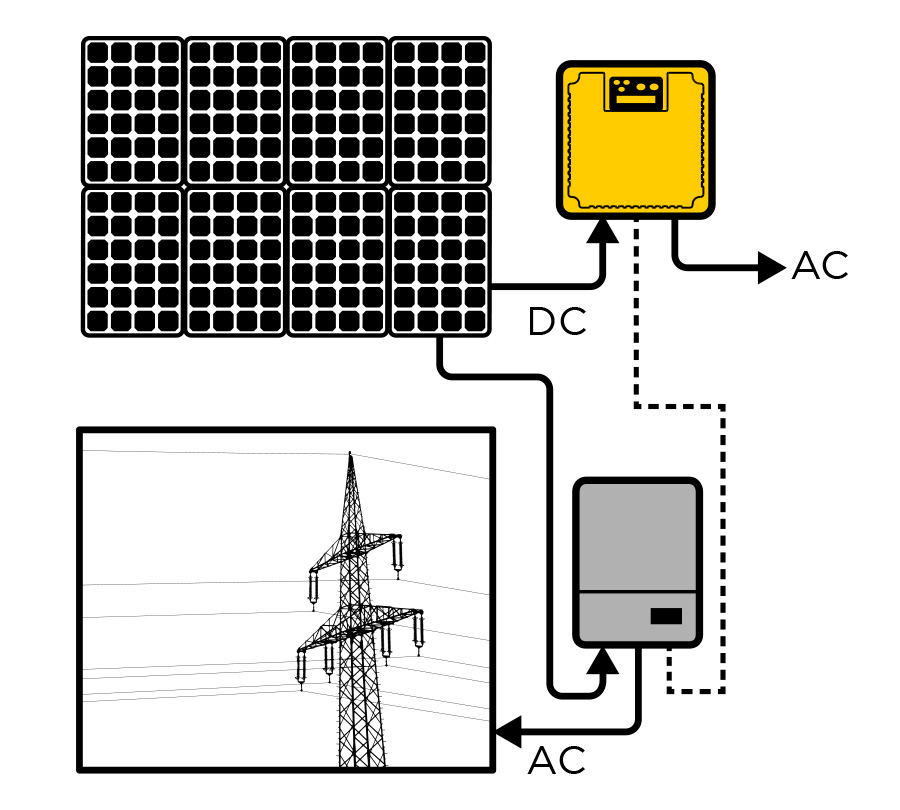
The inverter in MP (MultiPower) version can be powered in DC by solar panels or in AC by network or generator to ensure the functioning of the pump at any hour of the day.
This controls the peaks of water demand using AC input to avoid the oversizing of the photovoltaic system.
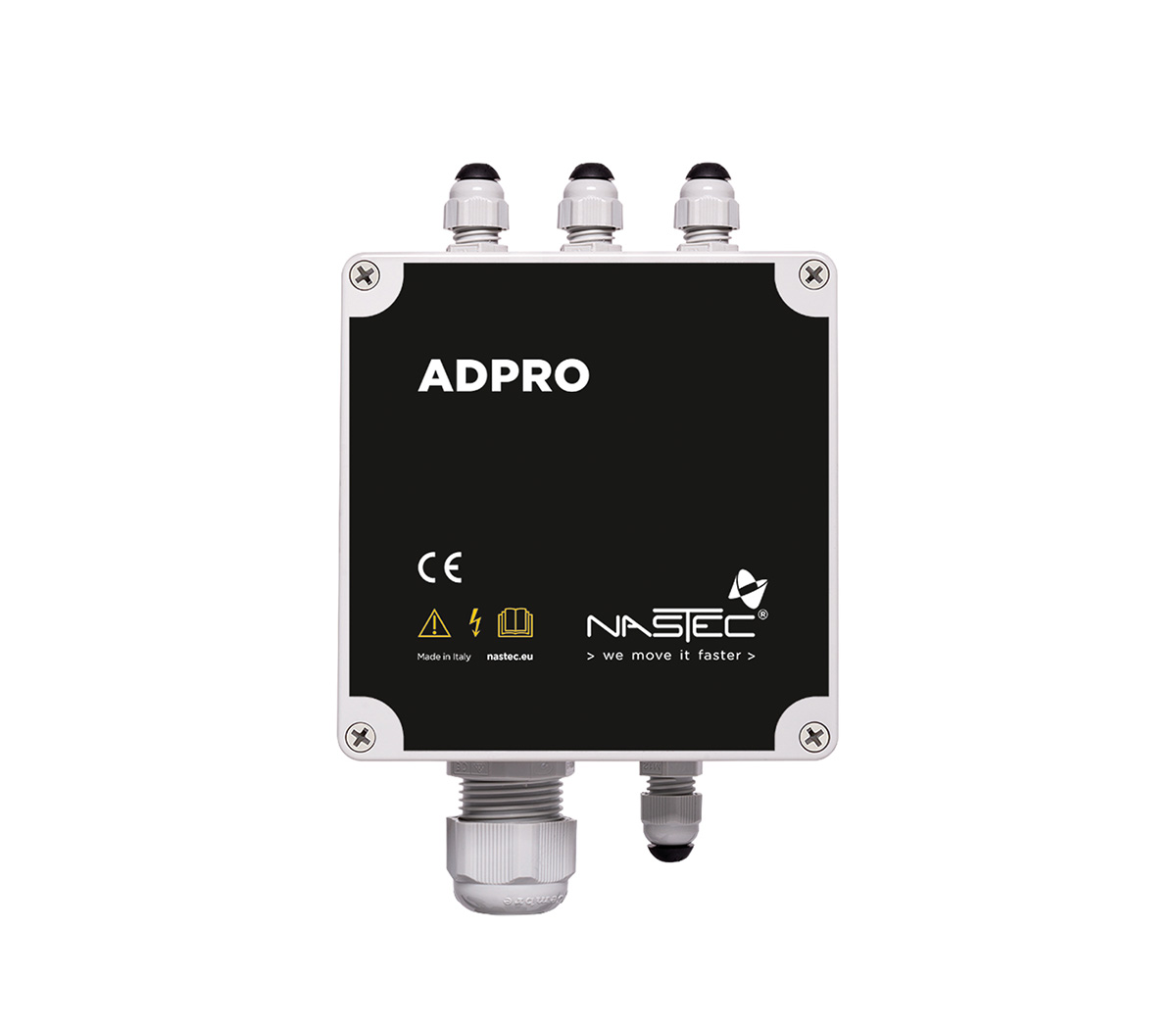
HMA accessory, used in combination with Solar MP models, manages independently the exchange from a source of energy to another on the basis of several options that can be select by the user:
• irradiance level
• hour of the day
• achievement of the requested daily range
• remote control trough digital command
It is able to convert DC voltage coming from solar panels into AC voltage for powering any pump driven by a three-phase motor.
Pump speed is constantly adapted to available solar irradiation thus maximising the amount of pumped water and making possible operation even in conditions of low sunlight.
It also offers complete pump protection against surges, overloads and dry running.
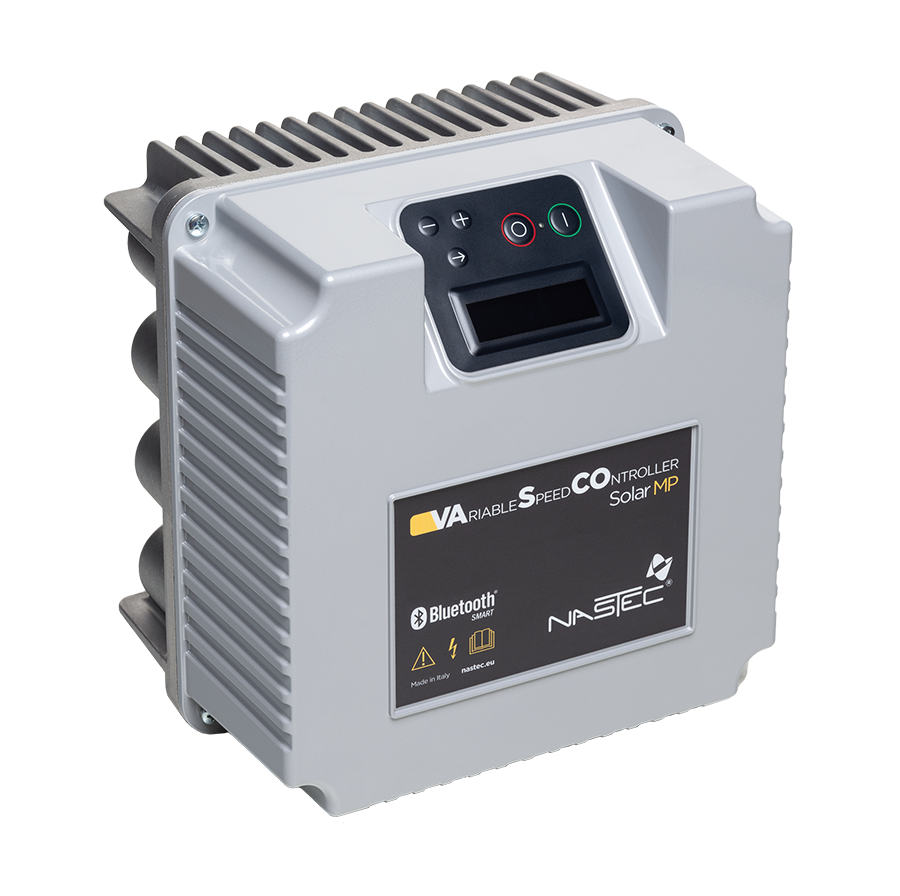
The device is built entirely of aluminium to ensure maximum cooling and durability. All other metal parts are made using AISI 304 stainless steel and therefore resistant to corrosion.
Two independent external fans and an internal fan provide perfect cooling. Their operation is adjusted according to actual thermal conditions, thus extending life.
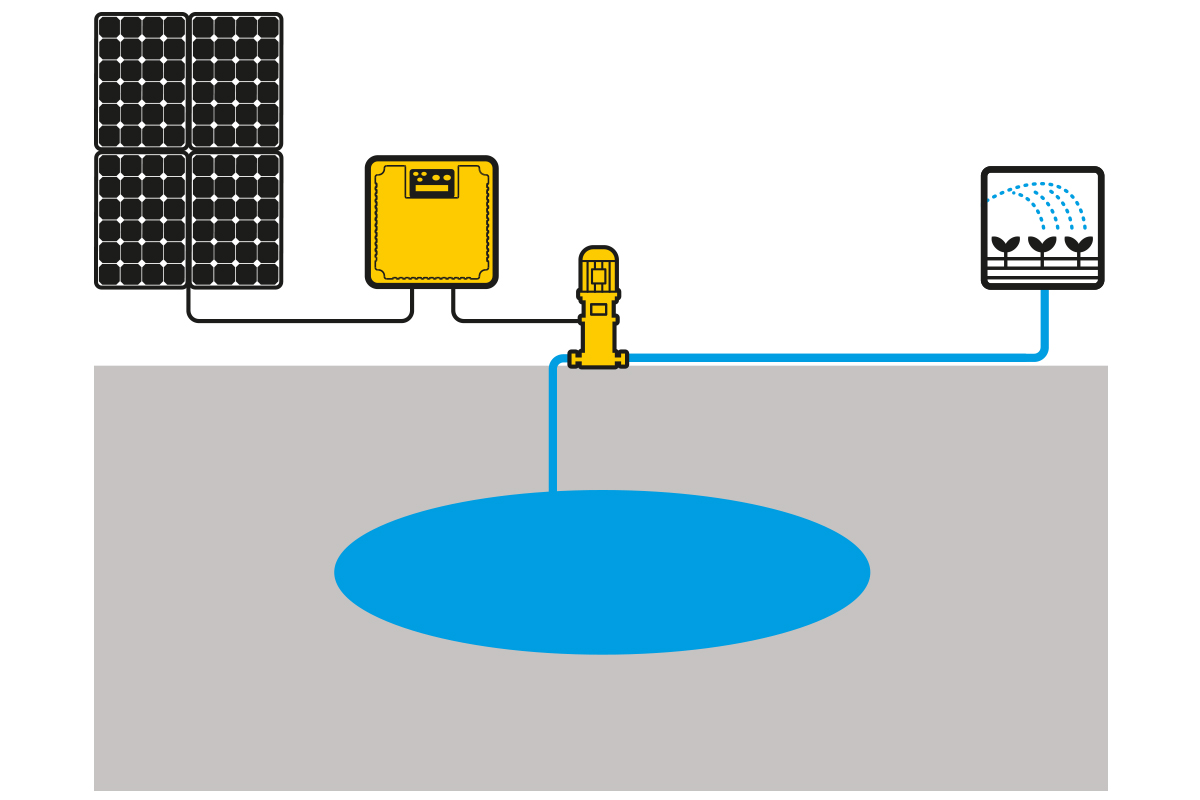
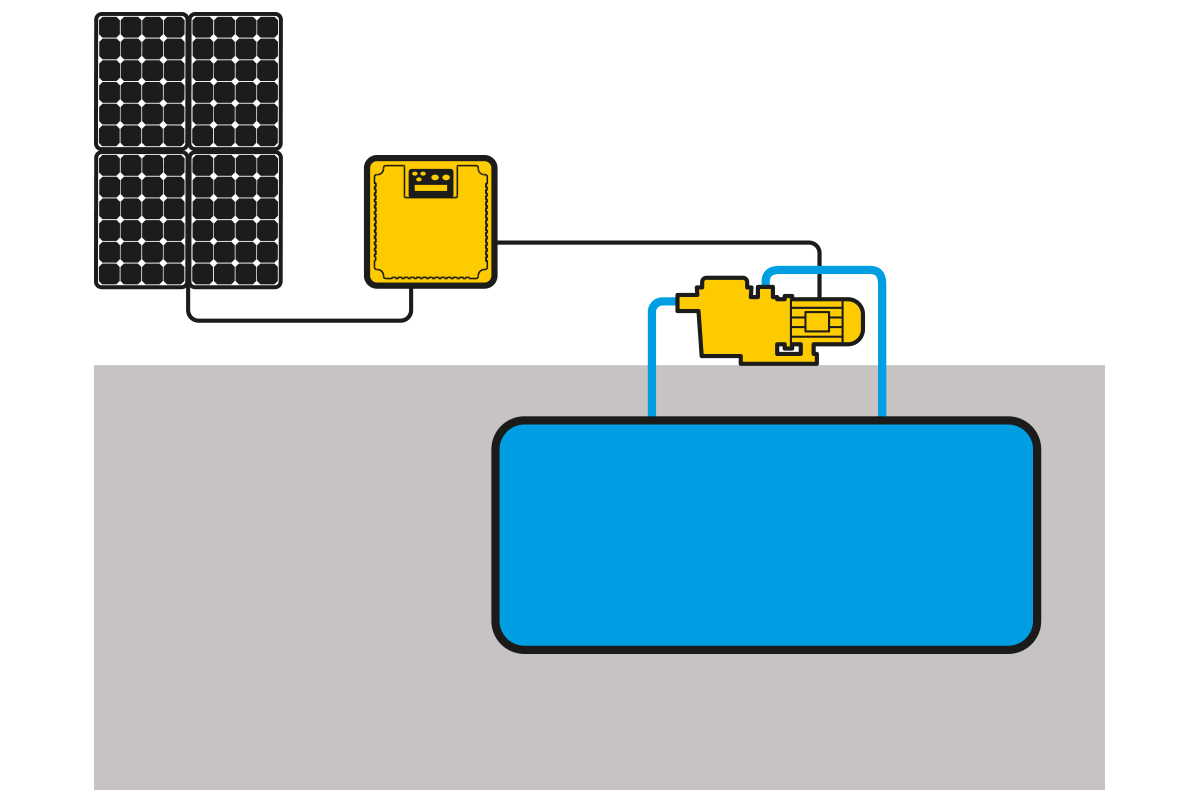
When using surface pumps, device can be used for an irrigation system drawing water from a nearby water supply, or powering a pool pump at no cost.
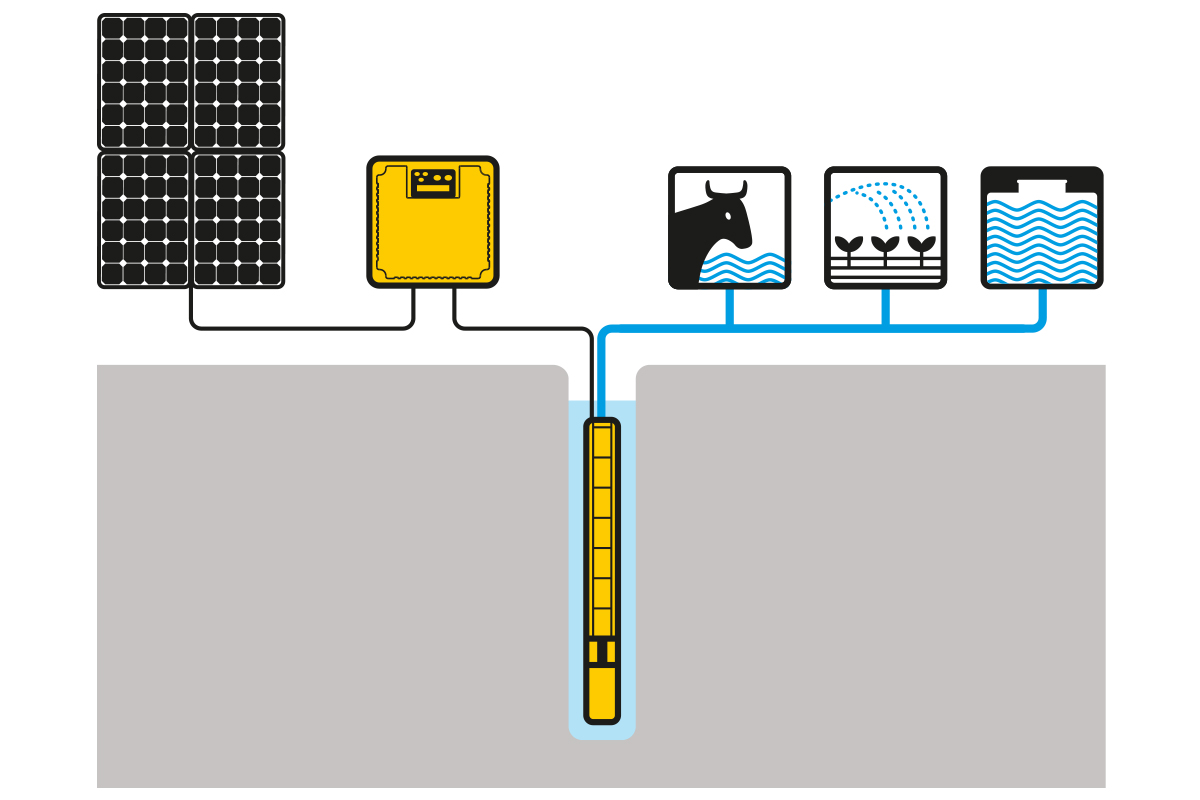
When using submersible pumps, it is possible to fill tanks for watering livestock or simply irrigate lawns or crops.
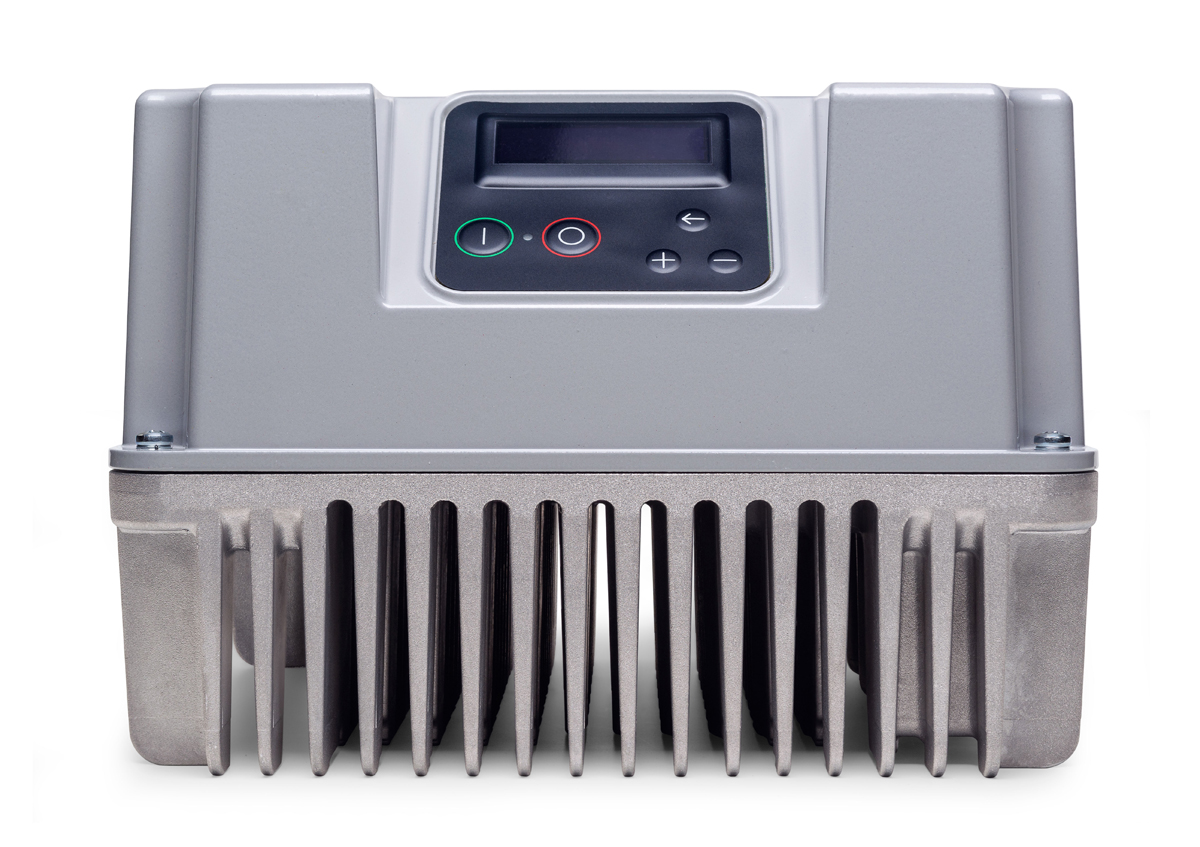
The inverter is equipped with a display to monitor key electrical parameters like input voltage, power, current and motor power factor. It is also possible to connect a pressure or flow sensor to monitor performance levels.
In the diagnosis menu are recorded inverter and motor hours, operation statistics, and the last eight alarms occurred. The programming menus are password-protected to prevent unwanted tampering.
The device can be connected to:
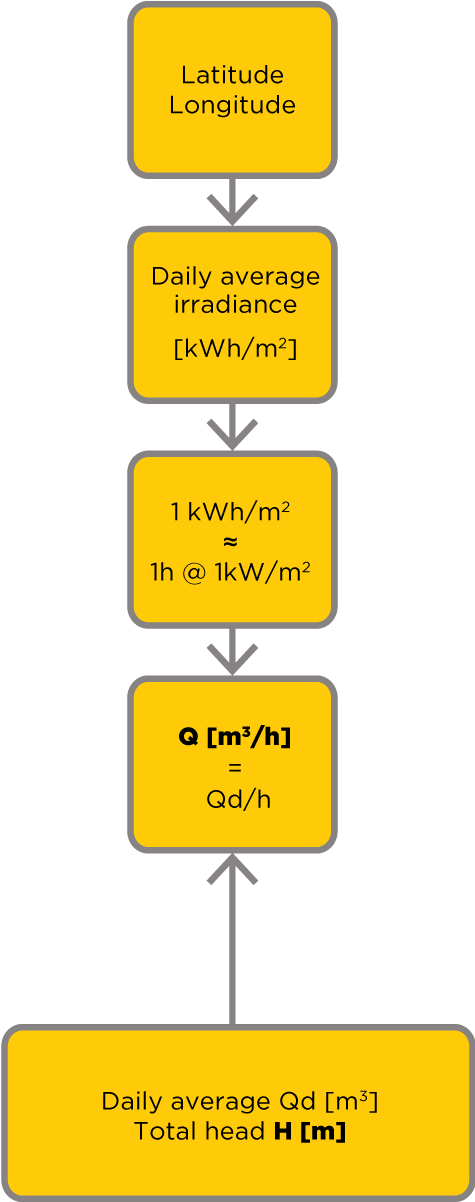
The pumping system must be designed taking into account the required daily flow rate, total head and the installation site.
In particular, the choice of the pump must be made considering the average daily solar irradiation.
Once the appropriate pump has been identified, it is necessary to know:
The model to be used is determined by considering voltage and rated motor current.
To ensure maximum performance, the solar system – consisting of one or more strings of solar panels connected in series – must provide:
Electrical motor power (P1). ùThe photovoltaic power (Wp) must be at least equal to the electric motor power (P1). Typically, taking into account the efficiency loss due to panel temperature, it is recommended to increase Wp by 15% with respect to P1.
Rated motor voltage. The rated voltage of each string of solar panels (Vmp) must be at least equal to the rated motor voltage multiplied by the factor 1.4.
The open-circuit voltage of each string (Voc) must be less than device maximum operating voltage.
Pump nameplate
Rated motor power: P2 = 3 kW
Electric motor power: P1 = 4 kW
Rated motor current: 8.3 A
Rated motor voltage: 3 x 400 VAC
VASCO Solar selection
The rated motor voltage being 400 VAC and the rated current 8.3 A, the most suitable model for the application is VS 409.
PV system sizing
PV panels used:
Wp = 240 W
Vmp = 30 VDC
Voc = 37 VDC
Imp = 8 A
Since P1 = 4 kW the required electrical power is increased by 15% so Wp = 4.6 kW.
To develop 4.6 kW 19 panels of 240 W are needed.
Vmp = 19 x 30 = 570 VDC is greater than the rated motor voltage multiplied by 1.4 (400 x 1.4 = 560 VDC) and
Voc = 19 x 37 = 703 VDC is less than the maximum voltage of VASCO Solar 409 (850 VDC).
For this reason a single string of 19 panels can be installed.
To maximize the efficiency and reliability of a solar pumping system, instead of using a single high-power pump, it is possible to divide it
into two or more pumps in parallel, each controlled by variable-speed inverters and powered by the same photovoltaic system. When the system consists of a single pump, in conditions of low irradiation, the pump is often stopped as the photovoltaic power is not sufficient to ensure its operation.
On the other hand, when the system is divided into multiple lower-power pumps, even in conditions of low irradiation, at least one or
more pumps continue to operate, providing water. This results in a significant increase in the overall efficiency of the system. In addition to this, the following benefits are ensured:

1. Inverter
2. Pump
3. Check valve
4. Photovoltaic system
5. Gate valve
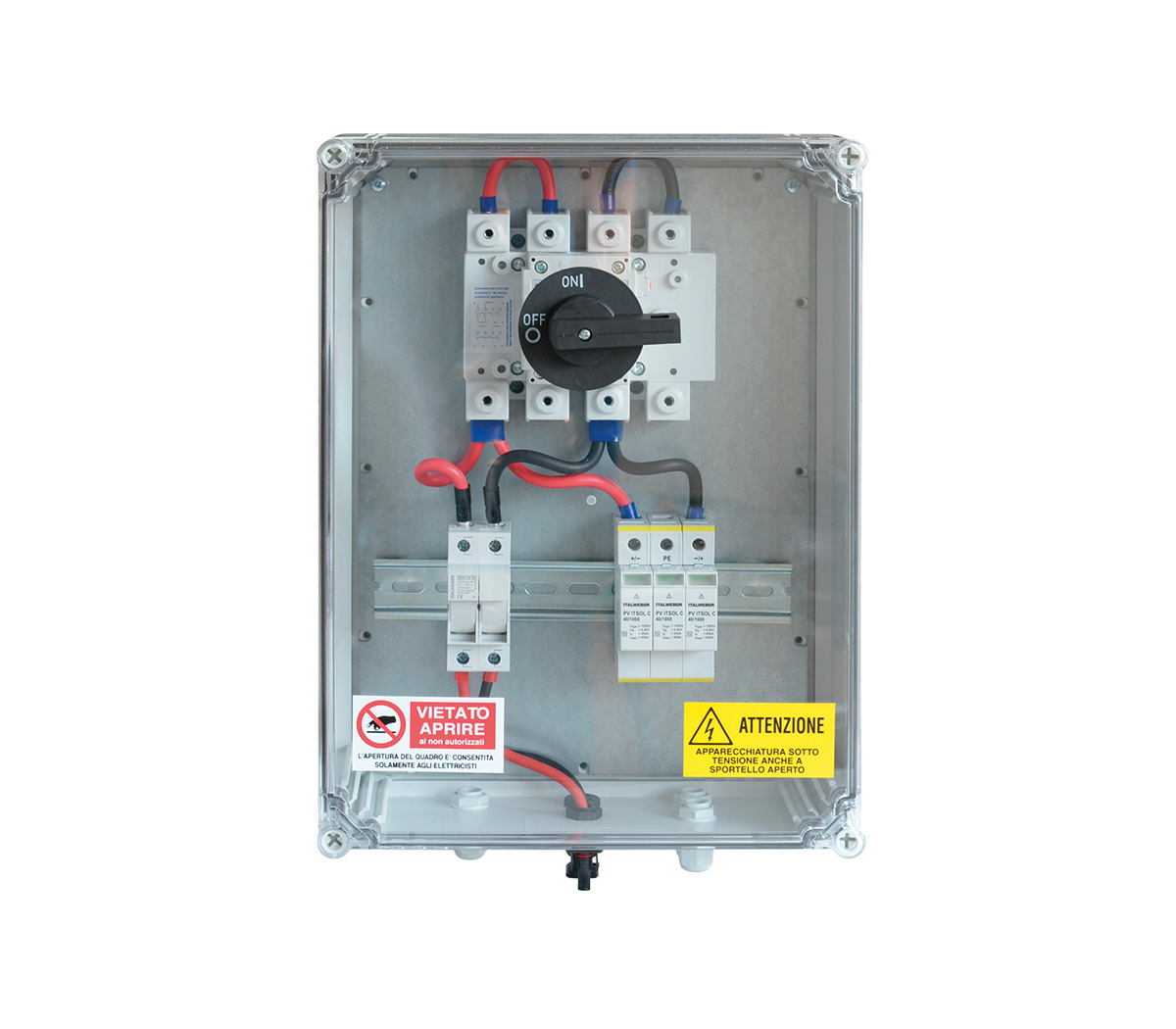
6. String combiner box with protections
7. DC disconnect switch
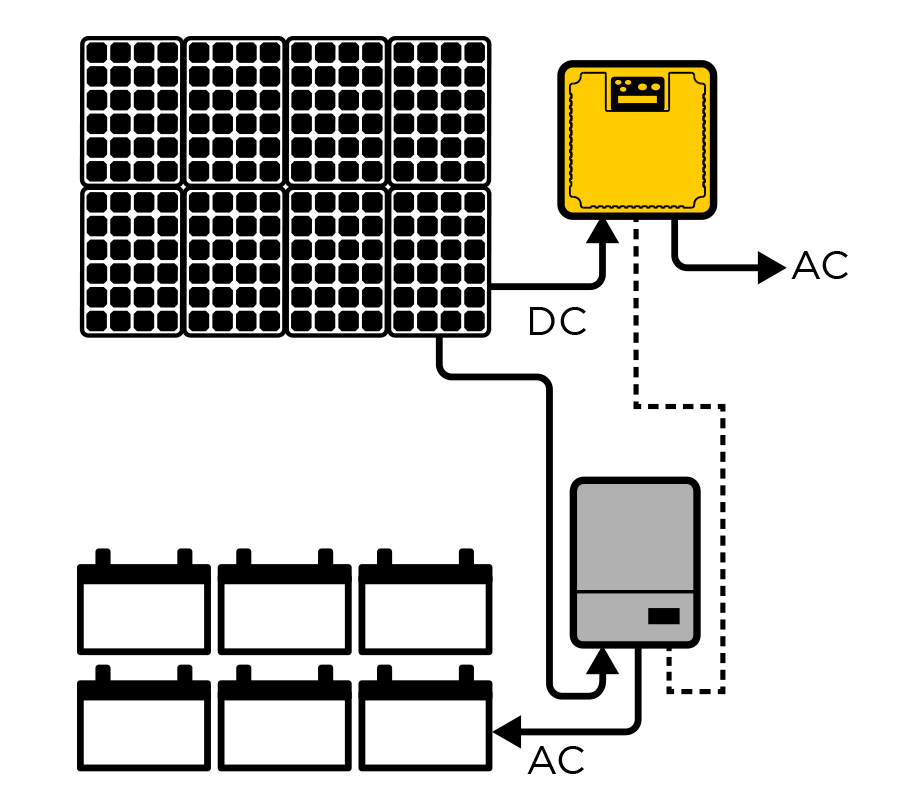
The “Extra Power” function, in combination with a grid-connected inverter or a solar charger, allows for the generation of energy into the grid or charging of batteries when the pump is not in operation or has already reached its maximum Through the dedicated relay output, the device sends a signal to the external device connected to the same photovoltaic system to enable or interrupt its operation.
This ensures prioritized pumping and, secondarily, the generation of energy for the grid or charging of batteries.performance.
In addition to protecting the motor from overvoltages and overloads, the inverter is capable of automatically adapting its performance to power and environmental conditions. This means that if the ambient temperature or the current absorbed by the motor were to reach the allowed limits, the inverter will automatically limit the motor frequency, ensuring the continuity of operation.
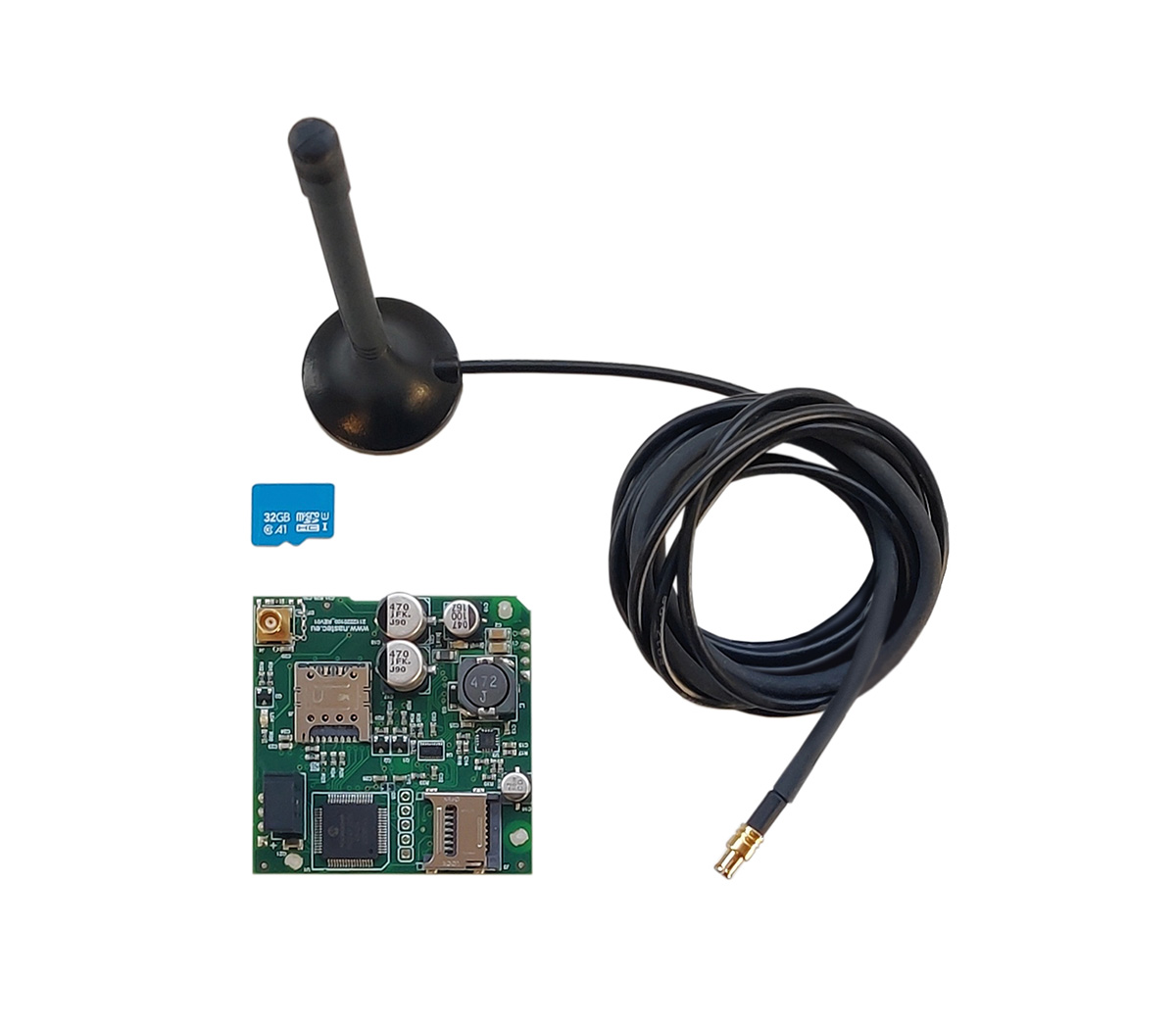
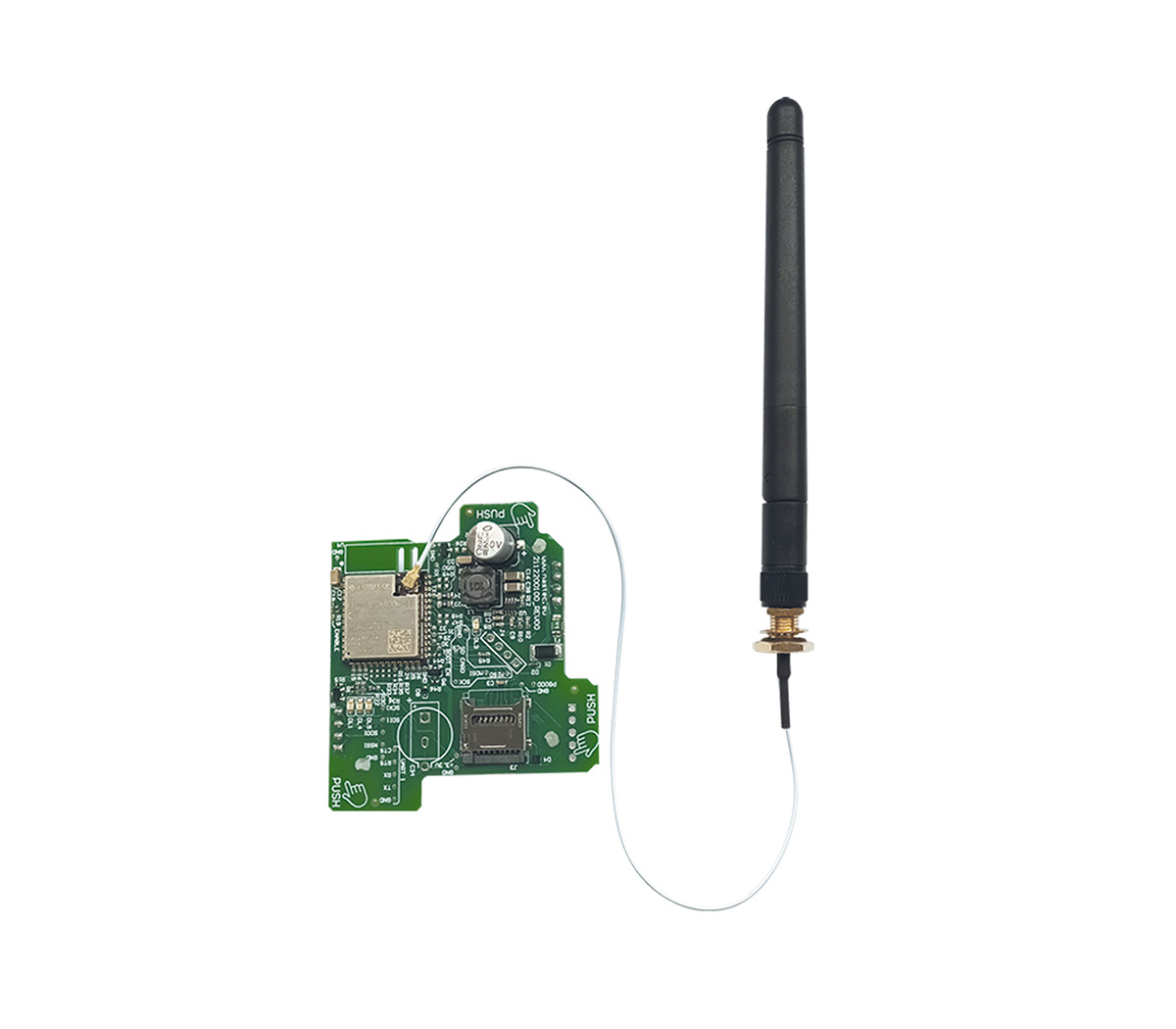
In addition to Bluetooth connectivity for control through a smartphone and app, it is possible to install a Wifi or GSM card onboard the device and manage the system remotely through the remo.nastec.eu portal. Therefore, there is no need to install any external communication device or subscribe to expensive telemetry services.
Through predictive analysis performed by the device during operation, it is possible to intervene before a problem occurs, minimizing intervention and repair costs. If the device is connected to the Internet, warning or alarm notifications can be sent via email to the concerned users. For this purpose, a quick configuration from the remo.nastec.eu portal is sufficient.
The device can be connected via the RS485 serial port to external control systems using the MODBUS RTU and BACnet protocols.
To obtain the latest available firmware version, updated with new features and improvements, simply connect to the device via smartphone and follow the guided update process provided by the app.
This ensures that each installation is carried out with the utmost capabilities, or new functions can be added to existing systems.
Modifying certain parameters often requires changing others to ensure the correct operation of the system. However, it is not always easy to know or remember the existing relationships between all parameters. For this purpose, the device can automatically adjust secondary parameters based on primary parameters, preventing users from important oversights.
Through predictive analysis conducted by the device during operation, it is possible to intervene before a problem occurs, minimizing intervention and repair costs.
If the device is connected to the internet, warning or alarm notifications can be sent via email to the relevant users. To do so, a quick configuration is required through the remo.nastec.eu portal.
The device is able to protect the pump against overload and dry running.
Dry running protection is performed by monitoring the motor’s power factor and therefore probes are not required.
The device also protects itself against surges and overheating.
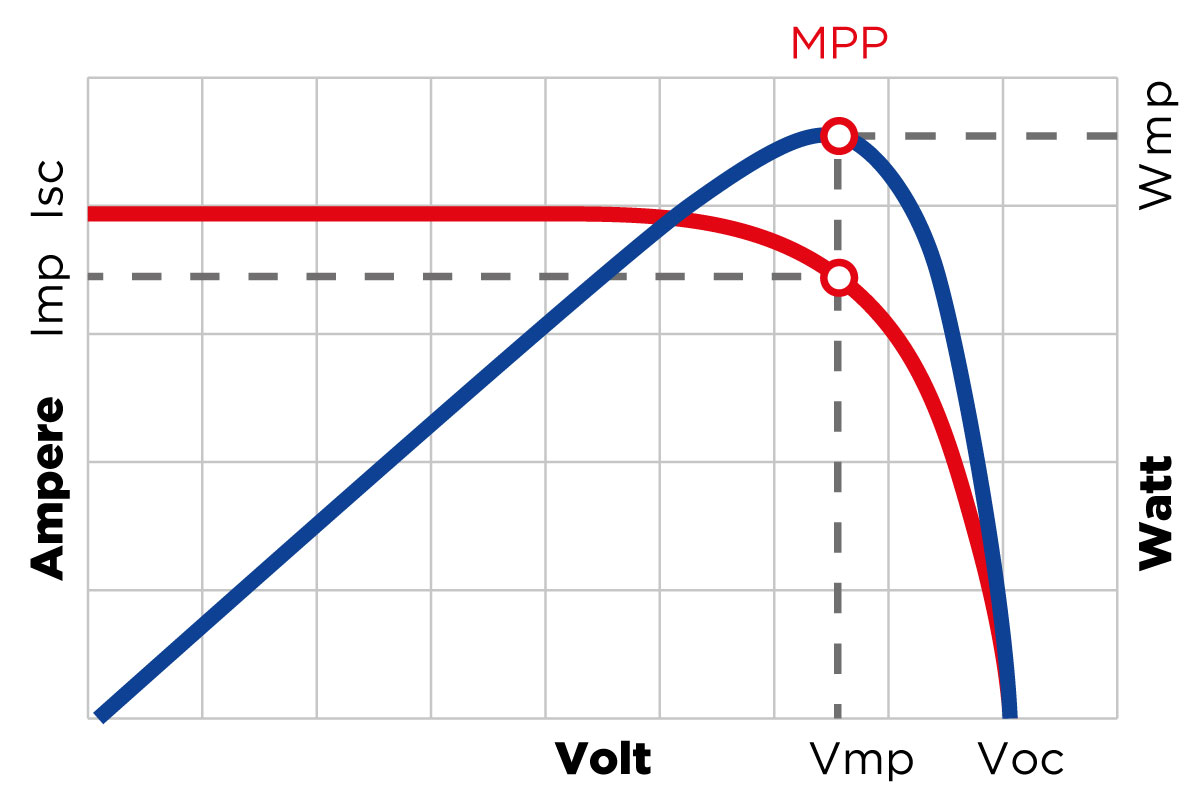
Based on the varying conditions of solar irradiation and temperature, MPPT (Maximum Power Point Tracking) maximises the electrical power drawn from the panels and therefore the amount of water pumped.
The greater the solar irradiation the faster the pump’s rotation speed, and consequently water flow increases.
When solar irradiation decreases (due to clouds or the different times of day), the pump reduces frequency and therefore the flow, but it continues to provide water until the irradation falls below a minimum level necessary to ensure operation.